

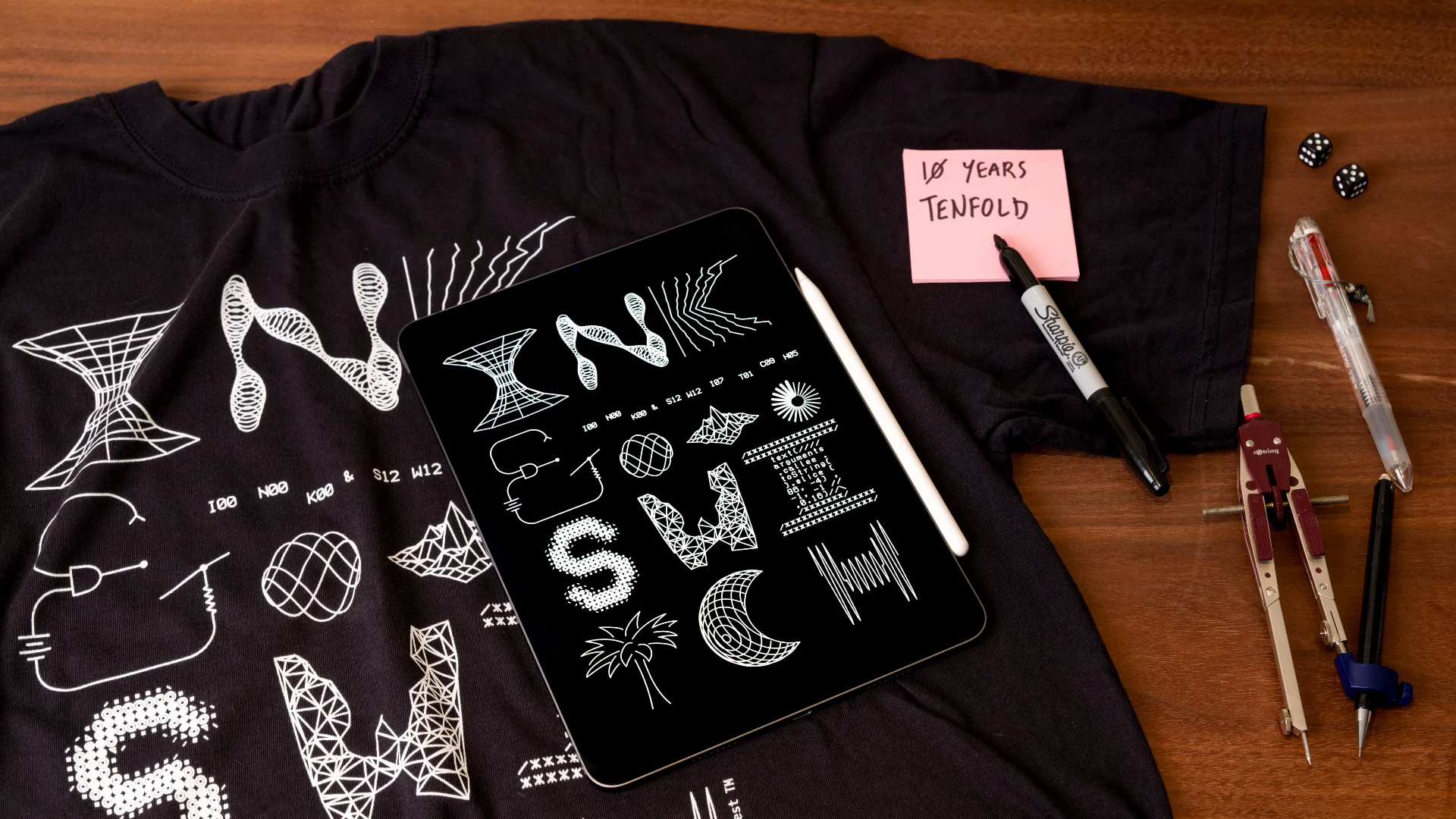
Ink & Switch turns ten this year. For a decade, we’ve been chasing a stubborn question: what might software look like if it worked more like a workshop than a product? The answers keep surprising us. Our research into dynamic environments for creative work has grown from a simple versioned writing tool into a place where we can now build and share all kinds of things. Tenfold is how we’re marking the anniversary: ten letters, ten years, an interactive piece built inside our very own research environment, Patchwork. What follows is the origin story: from encounters with physical artifacts to a wall of Post-it notes to a Lab-wide art week.
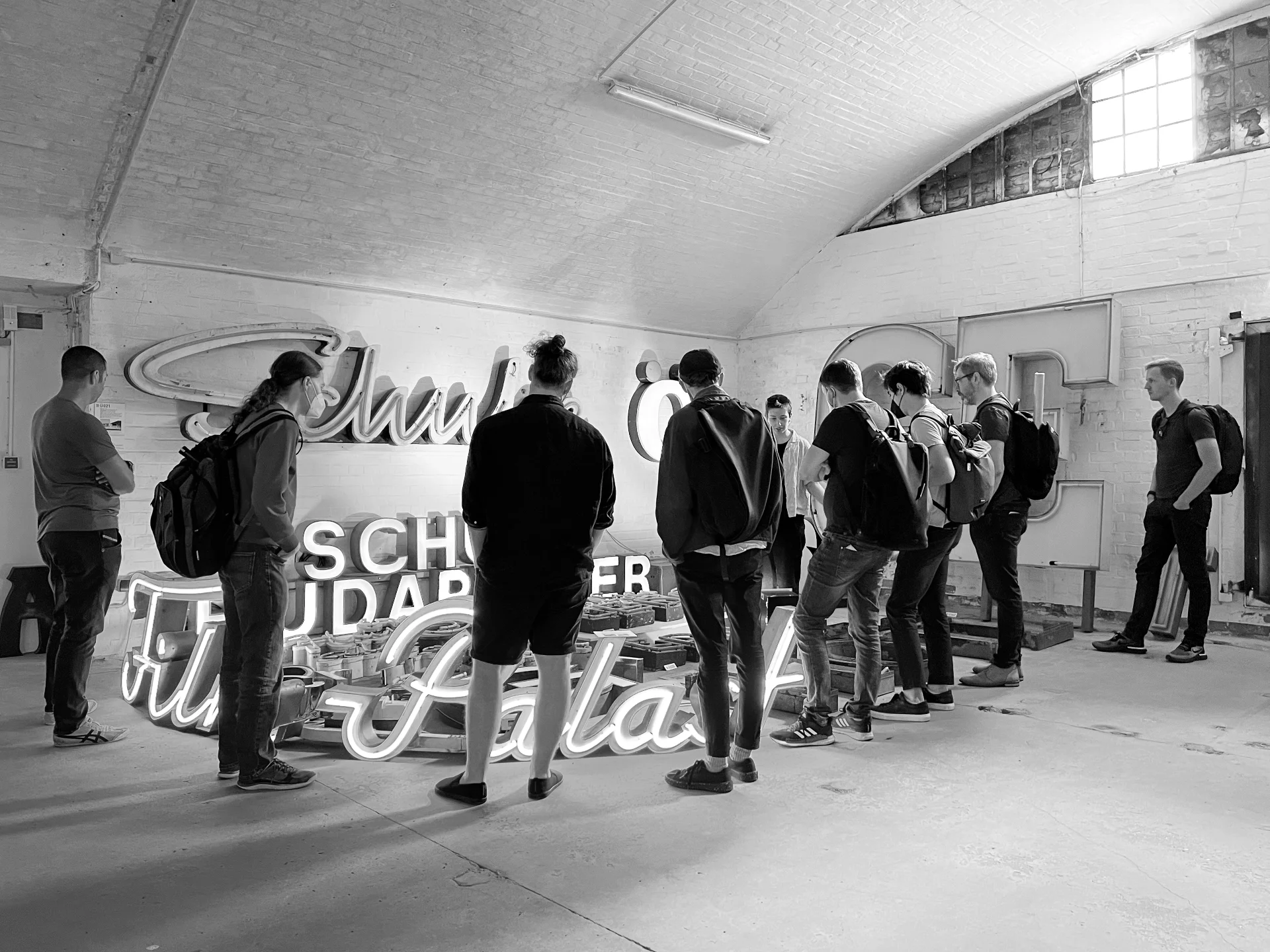
Lab staff and alums explore neon and built signage in Berlin.
During our 2022 Unconference in Berlin, Lab staff visited the
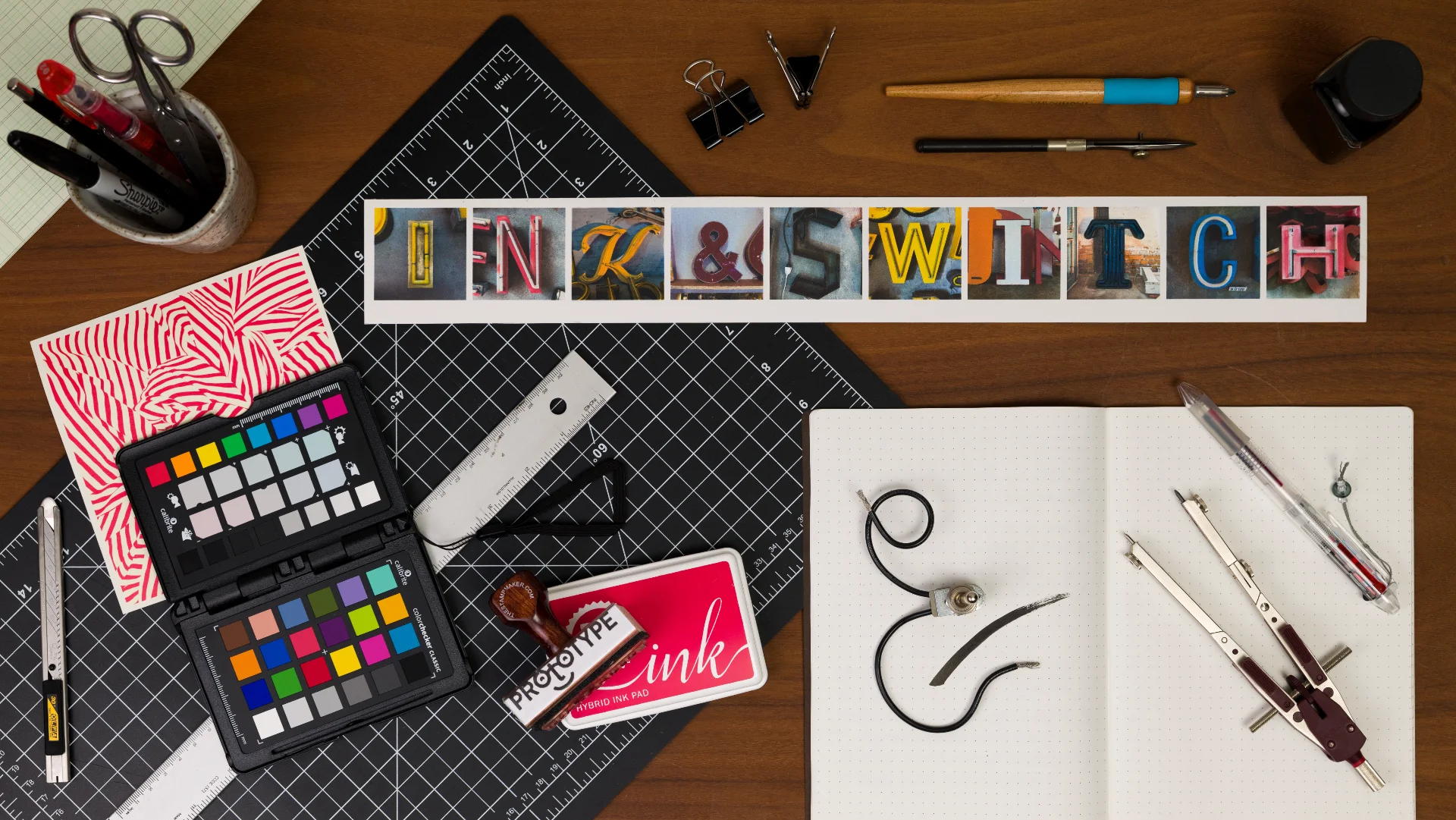
Letters from the type museum printed in sequence made a nice little artifact to adorn my workspace.
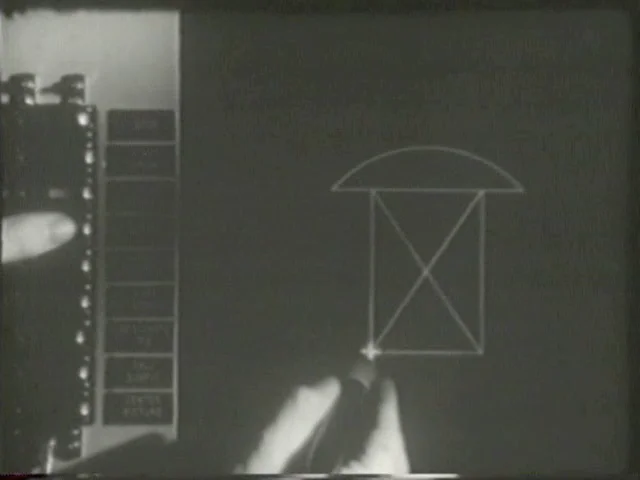
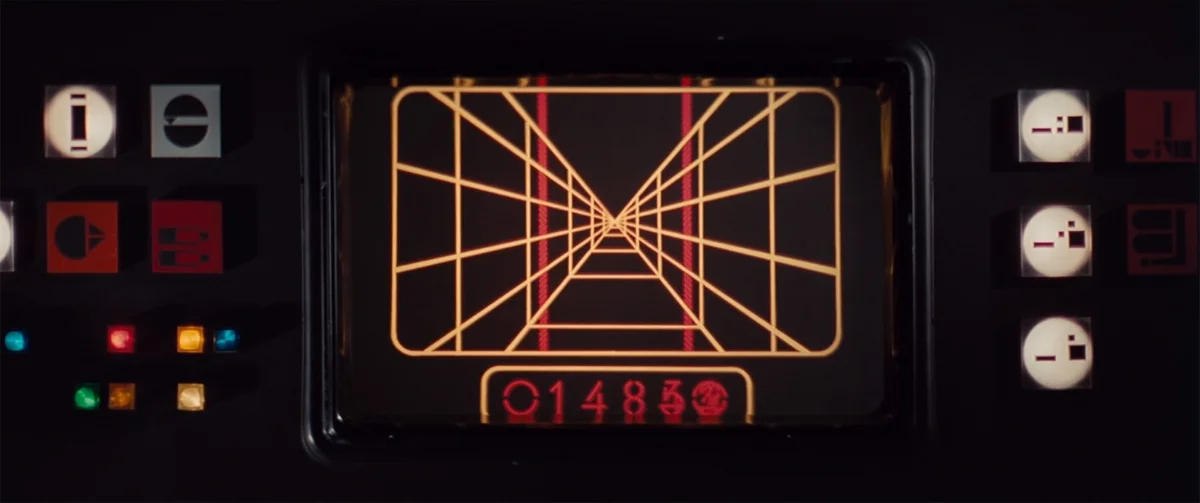
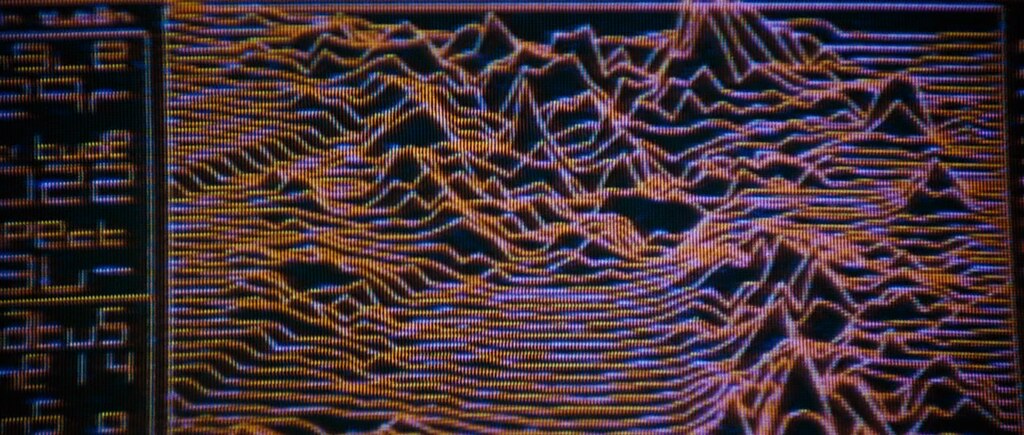
Tenfold started where my work usually does: with a love of pattern, tools, and the kind of experience that puts you in front of an object and makes you want to know how it works. The aesthetic tying it together is black and white, crisp lines on a flat field. Minimal schematic diagrams, type specimens, vector strokes, logo collections, monochrome on phosphor. Turtle
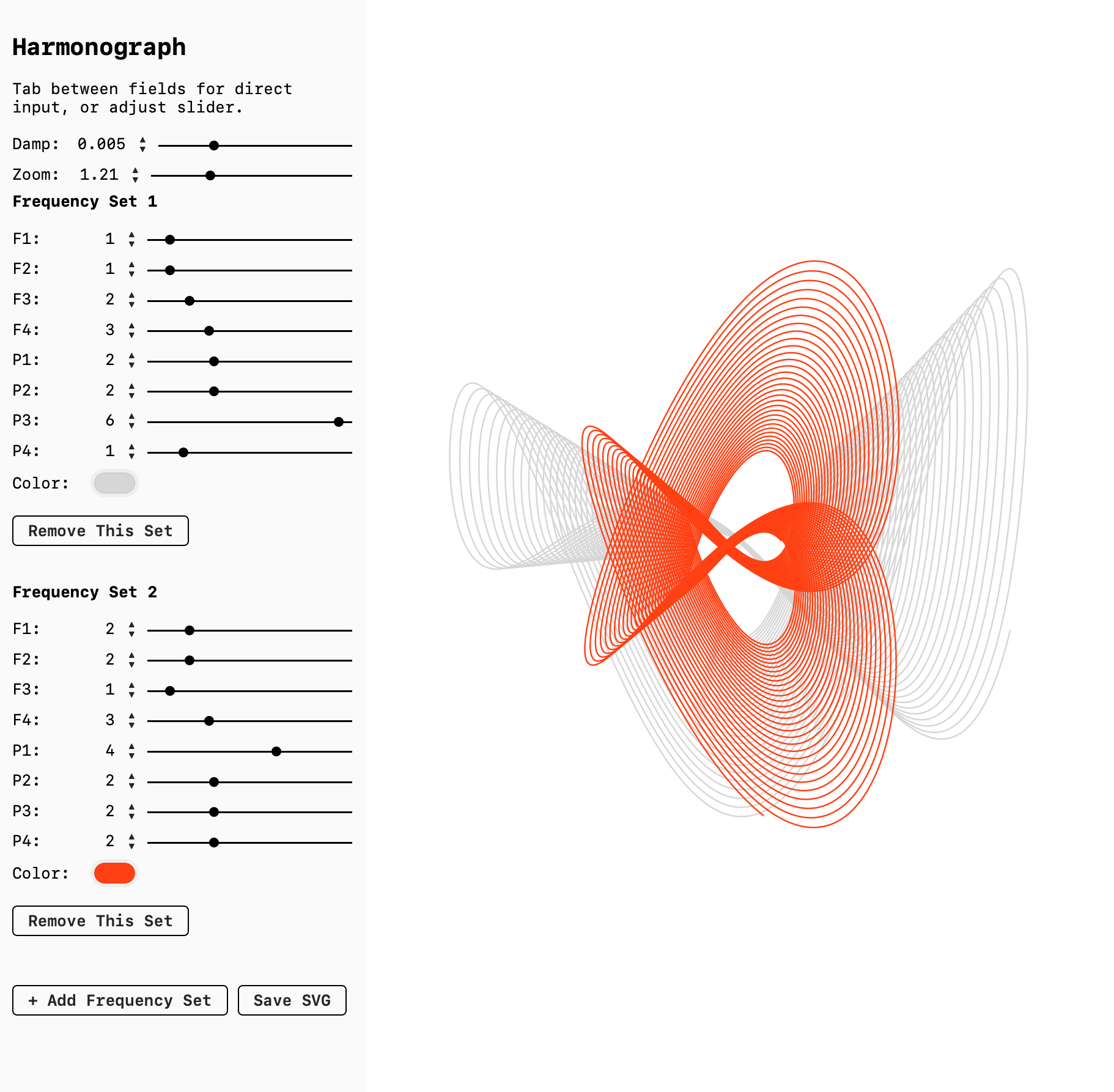
In October 2024, members of the Lab visited John
I’m not a developer by trade. Code has been a medium for curiosity since Logo, but my ideas have always run ahead of what I could code myself. I liked the look of Andy’s harmonograph and wanted to see if I could generate one for print with a harmony that appealed to me. Here, agentic coding has been a real help: the skill required to build these tools surpassed my knowledge of code, but never my visual sensibility.
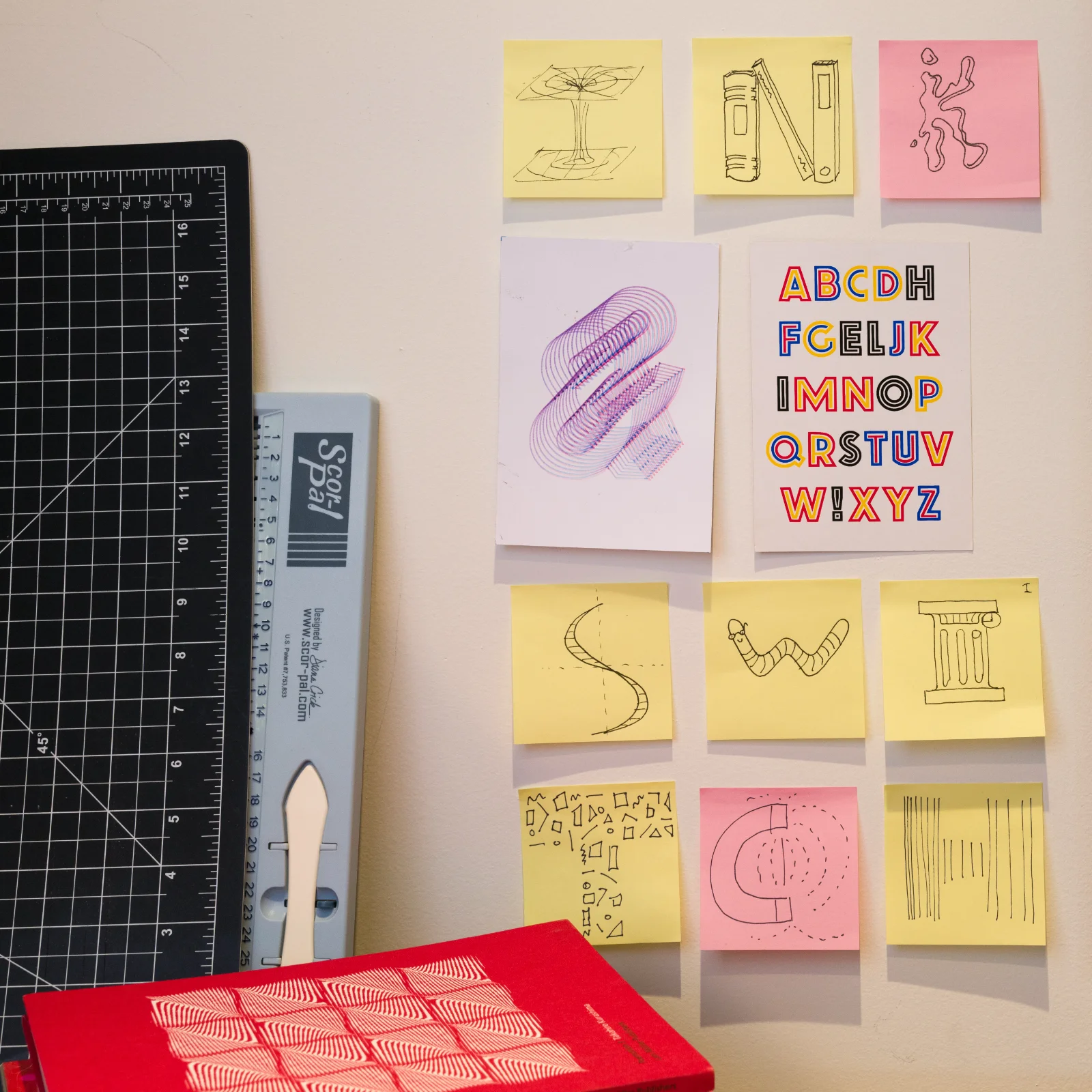
Post-it notes and postcards from Berlin, like a plotter art Ampersand by Martin
Post-it notes began to fill my wall: I-N-K-&-S-W-I-T-C-H. A
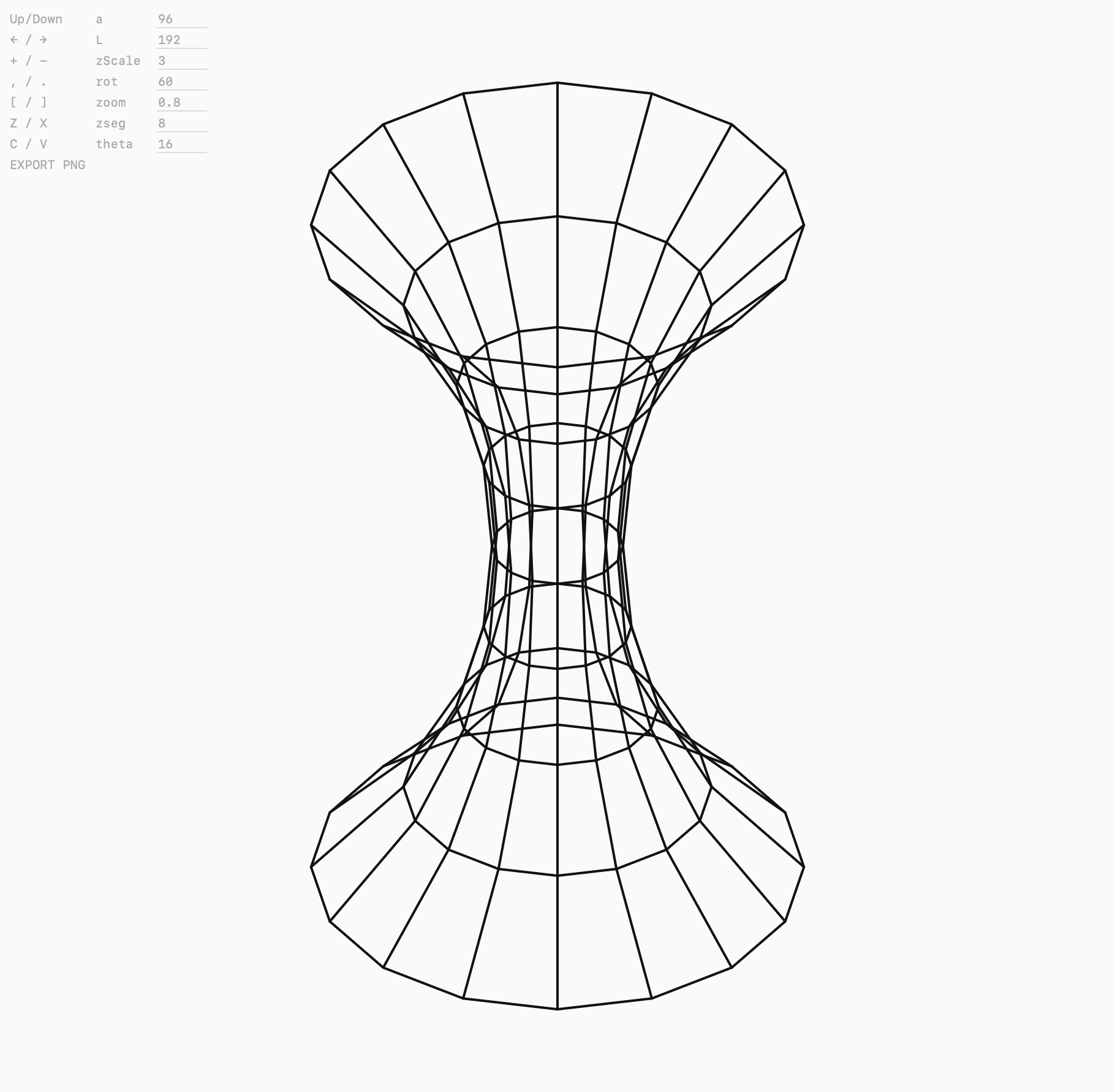
An alphabet needs more than one tool. At our weekly show-and-tell, I shared the catenoid alongside the wall of doodles, and a prototype was born. We ideated on the spot, and the project became real almost instantly. It didn’t feel like a pitch. It felt like an invitation. That’s a rare thing: a lab full of researchers giving room and support to what is, at heart, an art project. Tenfold owes a great deal to the kind of place Ink & Switch is.
Ivy and I iterated together on the playground, a tool for making tools. I sketched the grid and the control surface, including a Lissajous wave for chaos mode that, when it falls in and out of sync, looks an awful lot like the harmonograph that started this whole thing. Ivy took that and built it into something real. She did most of the engineering and a lot of the project management, keeping me and the rest of us on track toward a shared timeline. I’m grateful for all of it.
From there, members of the Lab made letters as an end-of-year art project, and we later opened the playground up to friends of the Lab. The letters that came in surprised me at every turn: tools and animations and pure type and, in at least one case, a playable bullet hell game. I hadn’t imagined game engines as something a letter could contain. This is the payoff of building the tool: someone hands you back a thing you would never have made yourself.
Tenfold has been one of the most fun things I’ve made, and it’s just the beginning of the story. In a follow-up note, Ivy tells the story of how the playground was built and all the weird little things people made within it. Stay tuned. x
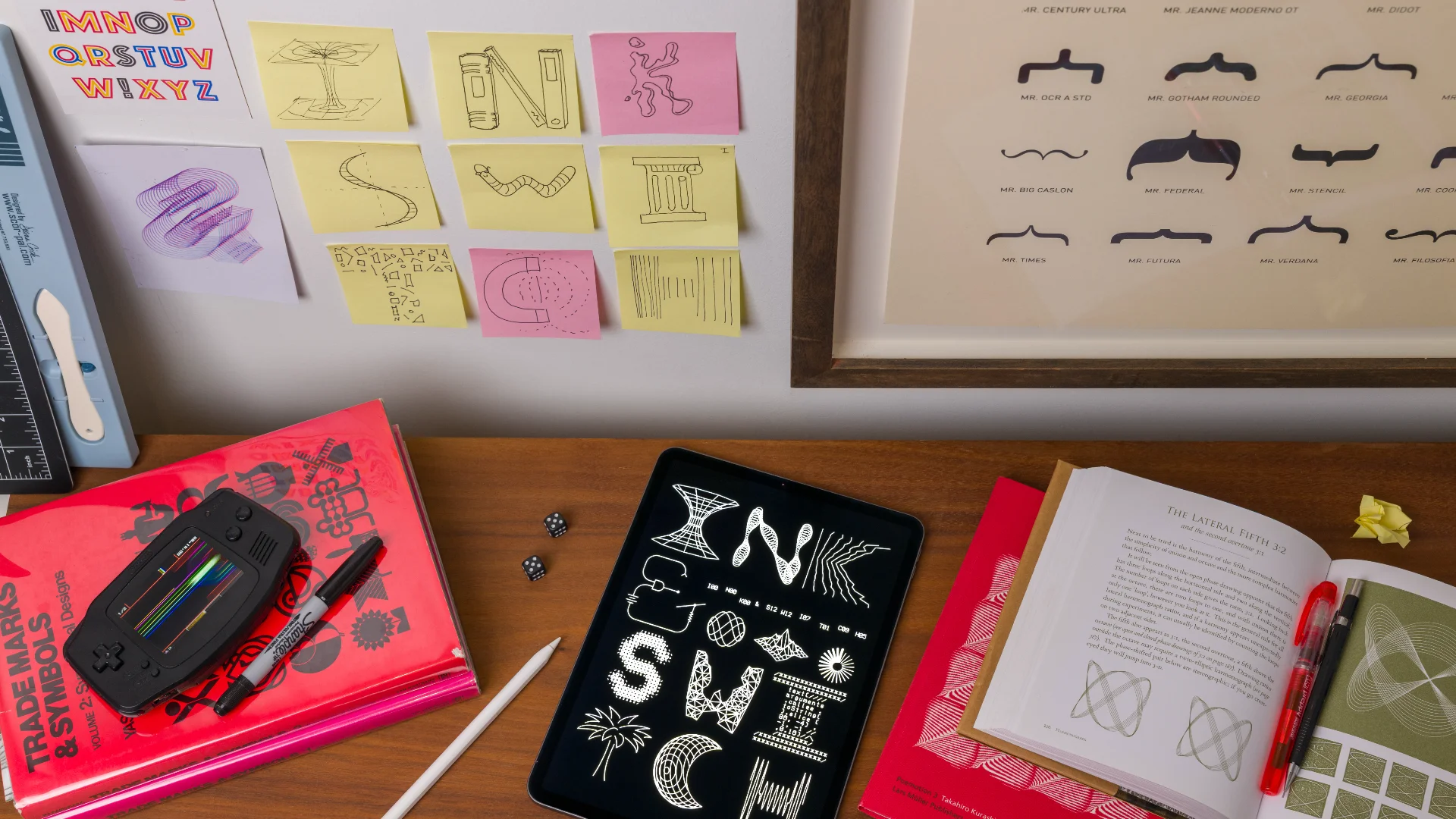
Inspiration within arm’s reach.
On the wall:
- Helios Type
Specimen postcard, by Ludwig Wagner - Plotter art Ampersand, by Martin
Bauer - Field Guide to
Typestaches poster, by Tor Koloğlu
On the desk:
- bit Generations
Dotstream game on GameBoy Advance - Kuwayama’s Trade Marks and
Symbols , vols. 1 & 2 - A roll of dice, and tenfold.
- The Wooden
Books series, with Designa and Quadrivium among them - Takahiro Kurashima’s
Poemotion series — interactive books that set pattern in motion. - Quadrivium, by Wooden
Books